
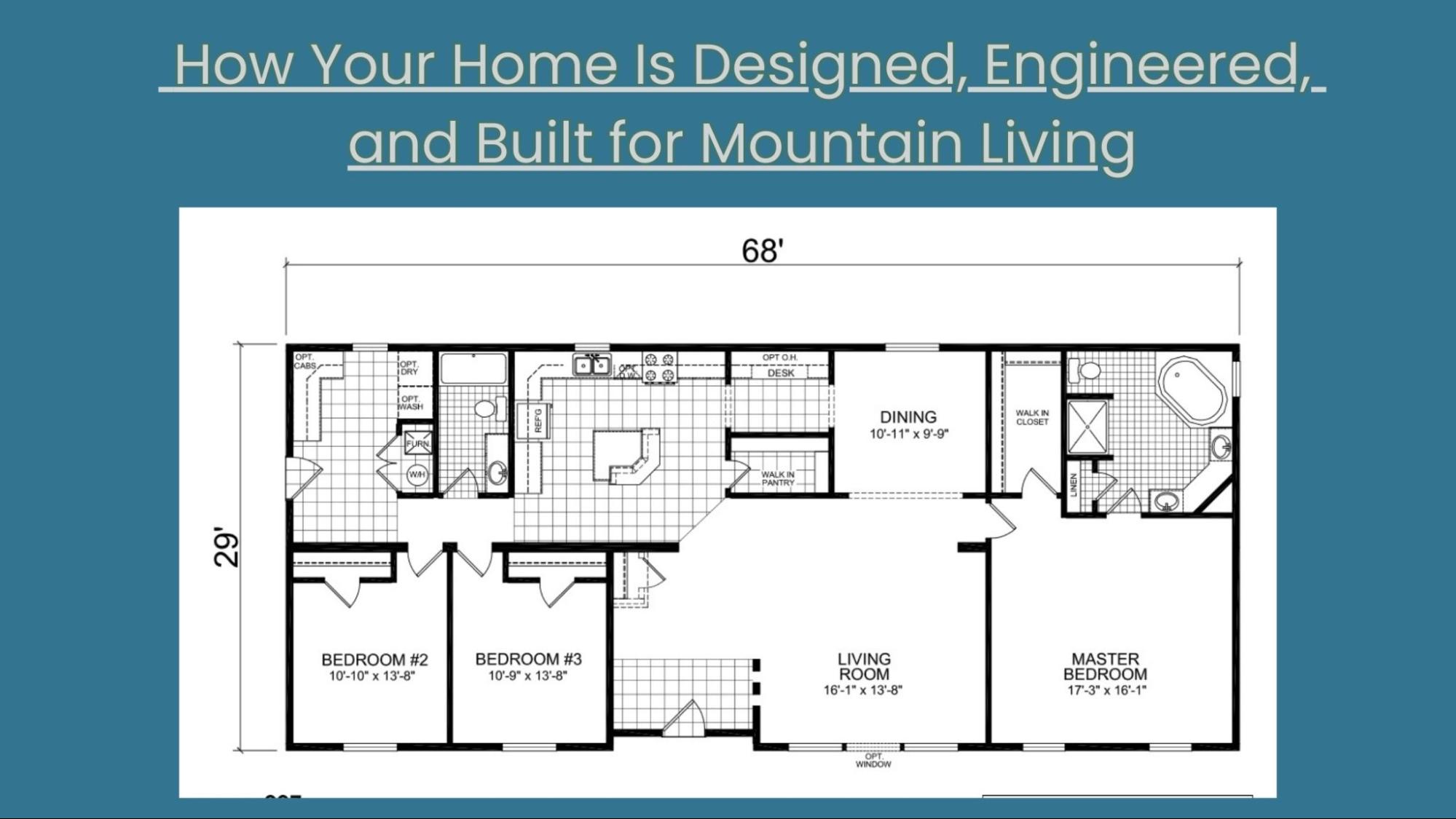
Once you choose your floor plan, the next step in the modular process is engineering and design. This is the part that turns your chosen home into a real, buildable structure that meets your county’s requirements, handles Colorado’s weather, and fits your land. It is one of the most important steps in the entire project, and it is also one that most buyers do not fully understand until they go through it.
At Rocky Mountain Modular Homes, we break this down clearly so you know how engineering works, what decisions you get to make, and how your home is customized for your property. Modular homes in Colorado are not built one-size-fits-all. They are engineered to your elevation, your snow load, your wind requirements, and the exact foundation your land needs.
This post will walk you through how the engineering process works, what it includes, and how design choices shape the final look and feel of your home.
Modular engineering covers the structural and mechanical systems of your home. The modular factory uses Colorado’s approved building plans, then adjusts those plans to match the requirements of the county where you are building. Every county has its own snow loads, wind ratings, and foundation specifications. Engineering ensures your home is built to meet those exact conditions.
Here is what modular engineering includes:
Note: Foundation drawings are not included in modular state plans. Every modular home in Colorado requires separate, site specific foundation engineering completed by a Colorado licensed engineer. This is an additional cost outside of the home price and is part of your site work budget.
These engineered plans are the documents your county reviews when you submit for permits. The plans have to match your land conditions, and they have to be stamped by a licensed engineer who is approved in the State of Colorado.
Colorado has elevation changes, harsh winters, heavy snow in many counties, and very specific site requirements. A modular home being delivered to Park County, for example, needs a higher snow load rating than one being placed in El Paso County. Fremont County will have different wind requirements than Teller County.
This is one of the biggest reasons modular engineering matters. It is not just checking a box. It is making sure your home is built correctly for the environment it will live in.
Your foundation is designed based on your home layout, the soil on your land, the slope of your building area, and county regulations. Foundation engineering includes:
Counties will not approve a modular home without foundation engineering. It ensures the home will sit safely and securely on your land.
If your property requires additional work, such as stem walls, retaining walls, or engineered excavation, those details are included at this stage.
While engineering focuses on structure, design is where you get to customize your home. This includes the finishes, layout changes, and personal touches that make the home feel like it belongs to you.
Design choices can include:
Modular homes are more customizable than most people realize. While the structural layout needs to stay consistent with engineering, you have a wide range of choices that shape the look and feel of your space.
Engineering and design often overlap at key moments. For example:
This is why the design phase does not begin until the home is properly engineered for your county. You want your choices to reflect what is structurally possible and permitted on your land.
Once the engineering is complete, you will receive:
These documents move to the permitting phase, which we will cover in an upcoming post.
How Rocky Mountain Modular Homes Supports This Stage
We do not expect homeowners to navigate engineering alone. We help you with the expectations of the county.
When engineering and design come together correctly, everything that follows becomes easier. Your foundation contractor knows exactly what to build. Your lender receives the documents they need. Your county sees a complete and accurate permit package. The entire project moves forward with clarity.
Engineering and design are not about checking boxes. They are about making sure the home you choose fits your property, your county’s requirements, and your personal style. This step determines how your home looks, how it performs, and how smoothly the rest of your project goes.
In the next post, we will cover the site evaluation process. This is where we talk about what happens on your land before the foundation work begins, how contractors evaluate your site, and what to expect during the early groundwork phase.understand what each document means and why it matters. We communicate with the factory, keep track of revisions, assist with county requirements, and make sure the plans you receive match the needs of your land and the